Masks are off: Nothing is impossible
Our analyst examines parallels and differences between Ukraine and Iran
So what is going on in the war with Iran?
“It’s enormous turmoil,” our analyst, Alexander Smukler of Montclair, said. “It’s a tsunami.
“Everyone’s head is spinning. Everyone who is not too tired to turn on the TV or follow the news is trying to understand what is going on, and what to expect and where this will end. This is a tsunami in the global game of thrones.”
Of course, Mr. Smukler is talking about the war in Iran and the tidal waves it has produced. “Everything is connected,” he said. “The enormous new conflict in the Middle East, and especially in the Persian Gulf, reflects what is going on in Russia and Ukraine.”
Mr. Smukler began the discussion with a declaration. “I fully support the military operations started by Israel and the United States against Iran,” he said. “This is not a political statement.” As an analyst, he tries to wall off his political desires and opinions from his dissection of the situation, because they get in the way of the clarity necessary for analysis, but he’s not doing that here. “This is an existential war for Israel,” he said; as an American Jew who grew up in Soviet Moscow, his identification with Israel is bedrock for him.
But “I will prove why it is existential,” he added.
“Thank God that the U.S. got involved, because Israel would never be able to defeat Iran by itself. This is a very narrow window of opportunity for Western civilization and the Western world to defeat probably the most dangerous regime on the planet. That regime is so close to producing a nuclear bomb, and if it did that, it would be untouchable.
“So this was the last chance.
“Right now, the planets aligned, giving a unique historic opportunity to stop Iran’s nuclear program and to stop the threat against not only the Middle East, and especially Israel, but for the whole world.
“Israeli leaders have been talking about the growing threat of a nuclear Iran for years. Not just Netanyahu. Every political leader in Israel has understood that the existential threat to Israel was growing through the years, starting at the beginning of our century.

“Iran never recognized the existence of Israel, but it was moving toward creating weapons of mass destruction, nuclear bombs that could not only destroy Israel but would give Iran the dominant position in that part of the world. So it would be a threat not only to Israel and for the Arab countries, but eventually for the civilized Western world.”
President Trump has a built-in deadline, Mr. Smukler said. The midterm elections are in November, which seems farther away than it is; some primaries already have been held, and the political season is underway. The Republicans are likely to lose the House and if there is a blue wave — a blue tsunami, as some pundits predict — even the Senate might change hands. “Fortunately, Trump used that time to start the military operation. I am not saying now that it is either successful or unsuccessful — we don’t know yet — but if he had waited another month or so, it would have been too late.”
But despite his personal feeling that “this operation was absolutely necessary in order to protect Israel, and not just Israel but the civilized world, from letting the mullahs have the nuclear bomb, at the same time, ironically, Trump stepped into the same trap that Putin walked into four years and one month ago.
“Just a month ago, Trump started a global conflict, turning the Russia/Ukraine war into a regional conflict that nobody is following right now, because right now everyone is watching what’s going on in the Persian Gulf.
“This is the first global conflict on a large scale,” Mr. Smukler continued. “People will disagree with me, saying that we had a similar conflict in 2001, with the Iraqi war, when thousands of American soldiers were on the ground and we destroyed the Iraqi regime. But that was not the same scale as what’s going on today. Now we are facing an earthquake that can shake the whole world politically, economically, environmentally, and psychologically.
“The genie is out of the bottle, and nobody knows who can put it back in, or what to do with it now that it’s out. It’s Jafar from ‘Aladdin’.’’
What do you mean, Mr. Smukler?
“When Putin invaded Ukraine, he thought that he’d take Kyiv in two weeks, tops, and the Ukrainians would meet the Russians with flowers and dancing. Instead, Russia now is involved in the bloodiest conflict in Europe since the Second World War, and nobody knows how to end it.
“When Trump started the operation in Iran, he had the same assumption — that they would finish the conflict, ignite a revolution inside Iran within a couple of weeks. That internal pressure from the inside would smash the mullahs’ reign once and forever.”
Boy, were they wrong.
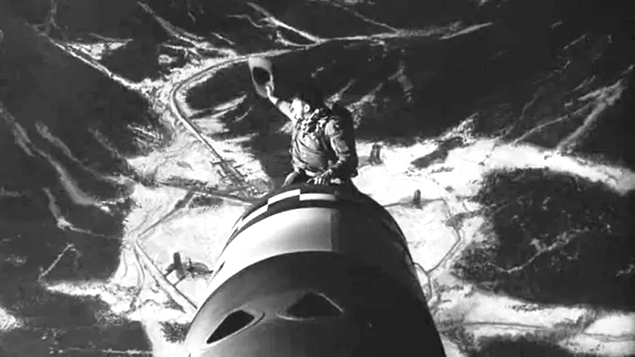
“Trump’s assumption was based on Venezuela, when they removed the central figure, Nicolas Maduro, from the chess board.” That assumption was incorrect.
“Trump made his very dangerous but historic decision, and as a Jew I applaud it,” Mr. Smukler said. “As a Jew, I applaud that decision, because it is existential for Israel, but obviously the decision was based on the assumption that Iran basically would replicate what happened in Venezuela. That even if the regime is not smashed, there will be traitors, or at least people in leadership who will cooperate with the United States.” After all, Venezuela’s vice president, Delcy Rodríguez, took over from Madura, with U.S. approval.
“But Iran has taken the path in a different direction.
“Why?” he asked rhetorically. Because of the differences not only between Venezuela and Iran as places, but because of the differences between the Venezuelans and the Iranians.
Venezuela is a Christian country, and that means that most Westerners, even if they are not Christian, intuitively understand a lot about Venezuela. But the Iranians — and particularly the huge numbers of Iranians who are members of the country’s Islamic Revolutionary Guard Corps — were raised to have the psychology of suicide bombers.
“We are dealing with completely different kinds of people. People who were raised from childhood with the idea that if they die as a martyr, a shaheed, they will be in heaven. They have grown up with the idea that life has been given to them to dedicate it to Allah, and they understand that they might have to die” to reach that distant, cocooned future life.
There are differences between the wars in Ukraine and in the Persian Gulf. Russians and Ukrainians are closely related to each other — they share a religion, a culture, basically a language, and even DNA.
Pulling back from that, you see that “Trump started the first global conflict between Judeo-Christian civilization and a radical Muslim civilization,” Mr. Smukler said.
It’s not like the war in Iraq. Mr. Smukler is not going to relitigate the absence of the weapons of mass destruction — obviously there weren’t any, he said — but Iraq was a country that was not radical or religious or even officially Muslim. Saddam Hussein led the Arab Socialist Ba’ath party. He was not an Islamist, and “Iraq was a totally secular country.” And Afghanistan was a regional conflict, not a global one.
But now Trump has started a huge war. What will he do next? “It is so much easier to start a war than to end one,” Mr. Smukler said.
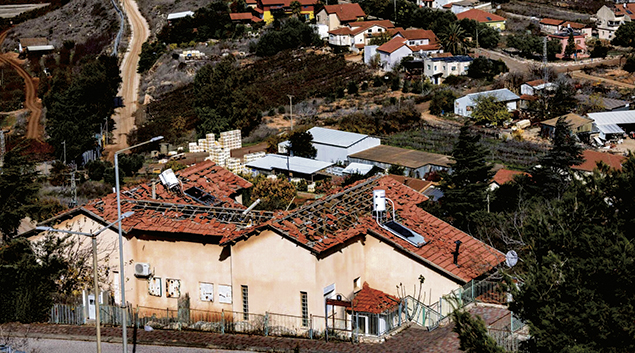
Although the Americans and the Israelis have eliminated at least 43 senior Iranian military officials and other leaders, as they tell us, that’s not enough to change anything, particularly not among people who look forward to martyrdom.
“Ayatollah Khamenei and members of his family were killed because he didn’t go to a bomb shelter. He decided to be a shaheed, and die in that way.
“He’s the genie now out of the bottle. By his death, he sent a message to millions of his fanatic followers, telling them that they should die in the same way. His death was an act of resistance.
“To his followers, this leader of the Shiite world did not die. Just like the prophet Mohammed, he flew up to heaven, calling his people to holy war.
“This is the nature of the conflict, and we have to remember that we cannot analyze what is going on in the Persian Gulf based on logic. We are dealing with a country full of people who understand the world differently from the way that we understand it.”
That brings Mr. Smukler to Donald Trump’s two negotiators, who have traveled the world trying and failing to settle wars (although they doubtless have succeeded in growing their net worth).
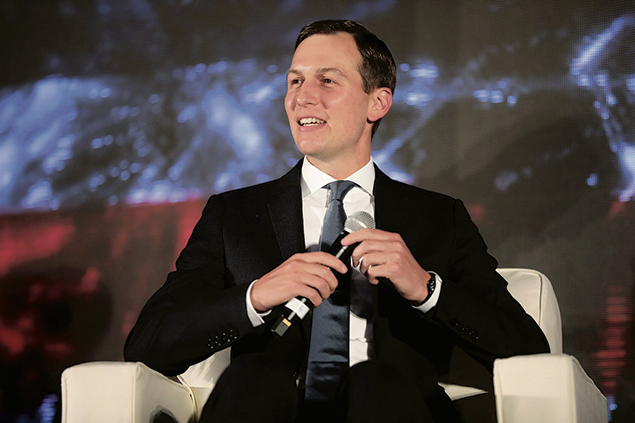
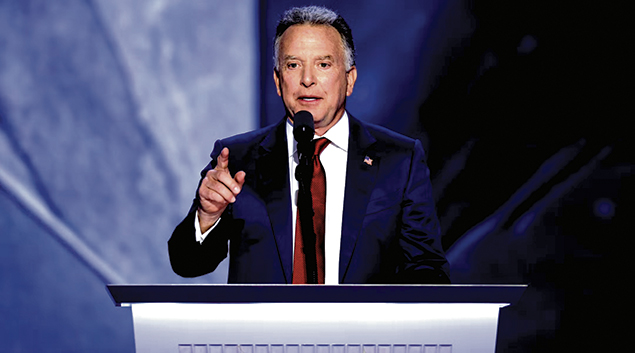
“Steve Witkoff and Jared Kushner are two Jews negotiating with Iran,” Mr. Smukler said. “That is a joke.” Not only are they untrained, not only do they not have official positions in the government, but the mullahs are known to detest Jews. Mr. Witkoff and Mr. Kushner are known to be Zionists, and that would make the mullahs loathe them even more. “They will never negotiate honestly with Jews,” Mr. Smukler said. “They will continue to lie to them. This is what I have heard from many sources, especially the ones who are experts in Iran, who spent many years there. They are saying that it would be shameful for the Iranian leaders to negotiate with Jews. They would never sign any agreements proposed by such emissaries.
“I think that Trump understands that, and that’s why JD Vance will take a leading role in the negotiations,” he added. “He will be leading negotiations with Iran.
“The negotiations now are a joke.”
Mr. Smukler hopes that Trump understands that just as he is using the negotiations to buy time on his end, the Iranians are doing the same on theirs. This brings up some questions — who is negotiating with whom, and if there really are negotations at all. We can’t believe something just because either the Iranians or Trump say it’s true.

“The Persians are a proud people,” he said. “Even though their leaders are hardline radical Islamists, there are thousands of years of poetry, art, and music behind them. It is a very old civilization. If you want to reach some kind of agreement with them, you cannot offend them. If you want them to accept a proposal, you have to give them some way to save face.”
What we’re seeing now, Mr. Smukler said, “is that the Iranians are responding to the attacks against them with enormous power and capacity.” Basically, they’re down but not out.
“And now, experts are saying that if the conflict is not over until June, the world economy will dive into deep economic crisis. They are predicting that if the war continues another three months, the price of oil will reach $200 a barrel. The United States will be less affected than Europe, but still it will be affected because all consumer prices will go up.”
As we all know, Iran is blocking the Strait of Hormuz. Because it’s so narrow, all Iran has to do is use drones to hit tankers; it could set a tanker — which is carrying oil — on fire. “If two or three tankers are on fire, and they sink, that would be a disaster for the environment not only in the Middle East but for the world, especially if the oil will be on the surface of the Persian Gulf,” Mr. Smukler said. “That would be a disastrous scenario, and obviously unacceptable for Trump.”
The only way to protect the Strait of Hormuz effectively is to have Americans on the ground there, Mr. Smukler said. “We’d need boots on the ground to create a special buffer zone there, and to prevent Iranian guerrillas,” whose ideology would allow them to become suicide bombers. The United States also would have to control Kharg Island, “which is probably one of the world’s largest oil storage facilities. If the United States controls it, it can protect vessels from being hit, and it could establish antimissile and anti-drone systems that would prevent drones shot from the mainland from hitting the tankers.”
But that would take “nobody knows how many thousands of troops on the ground there. Obviously, Trump is doing everything possible to keep American boots off the ground.” So that victory would be valuable but the price might be too high.
To make things worse, not only can Trump not eliminate Iranian drones now, but “suddenly the whole world realizes — whoops! — Iran has long-range ballistic missiles that could hit Diego Garcia military base, about 4,000 kilometers away.” That’s about 2,500 miles. (Iran fired missiles at the British base in the Indian Ocean; they were intercepted on the way over.) “That means that Iran can hit London, or any other city in Europe. Israel has been saying for years that Iran hasn’t only been building a nuclear bomb. It also has very sophisticated delivery systems for nuclear warheads. Now we see that Israeli leaders were right in warning the world about the danger. Now suddenly, the whole world woke up.”
There aren’t many good options available for the president, who doesn’t seem to have thought the situation through before he initiated it.
“It is ironic,” Mr. Smukler said. “Trump is in the shoes that Putin was in at the beginning of the war in Ukraine, when he suddenly realizes, whoops, this is not working. And for the last four years, Putin’s been involved in the bloodiest war in Europe since World War II. There are almost one million people dead, and another million people injured.”
Trump does not want that. “He is in just a difficult situation so that many experts are saying that he will just wrap up the operation, leave, and say that we won the war. We eliminated Iran’s leadership.” But his goal — although it’s hard to say what his goal was because he’s listed so many of them, often only once before moving on — was something else.
There’s proof that something really is wrong, Mr. Smukler said, and that proof is not in Iran. “Trump was going to meet with Xi Jinping,” China’s president. (China never formally confirmed the meeting but the White House said that it was set for March 31 to April 2.)
“People who understand can see what is going on in the global game of thrones, that things are not going the way that Trump wanted them to go.”
Remember, Mr. Smukler said, that “the planets aligned” to allow Trump to fight Iran, “I am far away from thinking that Trump just decided to help Netanyahu,” as Secretary of State Marco Rubio suggested and Trump’s supporters angrily repeat. Instead, he thinks that Trump attacked because “Trump needs a very strong card in his poker game when he meets Xi. “Trump was going to play that card in his negotiation to prevent the invasion of Taiwan and provide guarantees for supplying semiconductors and rare metals. If he can control and keep his hand on the throat that is the Strait of Hormuz, he would have a strong hand. But now he has no cards.
“So he was rushing to accomplish a win in Iran and go to China. But something went wrong.” Which is not surprising for most Americans, given his lack of preparation. However, it seems to have been a big surprise to the president.
And at home, “Trump is facing enormous danger,” although it’s far more metaphoric than the danger anyone in harm’s way in the Middle East faces. But he’s on track to lose the House, and possibly even the Senate, in the November midterms. Prices are rising, at the gas pump and beyond; his tariffs continue to be unpopular, and the brutal way he’s been deporting immigrants — not just the criminals among them, the “worst of the worst” he’d said he’d remove, but people who’d lived in this country for decades — and the war itself is causing divisions in his base.
He’s got to do something.
“So what will he do now?” Mr. Smukler asked. “Well, he does have options. I can see three of them.” But they’re all grim.
First, he can send troops. “I don’t think he’ll do that,” Mr. Smukler said. “We will lose thousands of lives, and the war will be like a swamp.” Maybe even like Vietnam. “In my mind — maybe I am mistaken — there isn’t a scenario for a quick, successful operation and fast, easy way out.
“The second option is to start bombing Iran’s oil facilities, oil fields, gas and energy plants, and especially their nuclear stations, which the Russians built. Basically, he can start smashing up everything that makes Iran strong economically.” If those facilities would be set on fire, which easily could happen, that would be a terrible blow to the world’s environment, but that is not Trump’s concern.
“But that wouldn’t work, because in modern Iran, ruled by the Islamic Revolutionary Guards, the economy is not the issue. The issue is revenge. The goal is to hit and kill as many enemies as possible. So trying to diminish them economically will not work.
“The Ukrainians are using that strategy, trying to make Putin’s war as expensive as possible by eliminating their plants, their ports, and their pipelines, one at a time. Putin wants peace back in Russia, and he wants to see Russia prosper. This is painful for him.” Not painful enough for him to stop the war, but painful enough to cause him discomfort; it’s not that he cares about the victims — he doesn’t — but he does care about Russia’s internal political and economic situation.
“But the Islamist radicals in Iran don’t care about the future. They care about revenge, and about being shaheeds.” Martyrs. “So they don’t care about the danger to the economy. And anyway, the damage already is done, and they understand that it won’t be reversed. They don’t have anybody looking to rebuild the country after the war. But they don’t care. It’s existential for them. it’s a religious war. It is the first war we are witnessing between the Judeo-Christian and the Muslim world.
“So then the third option is a tactical nuclear bomb.”
What?
“I think the world is one step away from the use of a nuclear bomb.”
Mr. Smukler said that he thinks that President Harry Truman’s decision to bomb Hiroshima and Nagasaki to bring about the end of World War II will be cited as a model. “Truman explained that by using the bomb, killing about 300,000 people, he saved 500,000 American lives.” Trump will use that as an argument, he said.
He thinks that Trump also will say that he used the bomb — a smaller-scale tactical nuclear weapon, smaller than the ones dropped on Hiroshima and Nagasaki — “looking for the 400 kilos of enriched uranium that he says Iran has. I think that it was sent to Russia as soon as the12-day war started last June, and it’s in Russia now.”
Putin had threatened the use of a tactical nuclear bomb against Ukraine, Mr. Smukler said, but didn’t use it, because the geography is different. “Ukraine is next to Russia. Kyiv is only 470 miles from Moscow. So nuclear missiles pose enormous risks for the European part of Russia because nobody knows which way the wind will blow, and Russians remember very well what happened in Chernobyl. Hundreds of thousands of people died because they were exposed to radiation” — and that explosion, remember, was an accident. “Russia always hid the information, but Russians remember it well.
“That’s the main reason why Putin excluded the chance of using even a small capacity nuclear option, my sources tell me. He couldn’t exclude the risk from radiation.
“Trump doesn’t have that reason.
“I’m not saying that Trump will do it, but I want to sway that the world is one step away from the use of a nuclear bomb,” Mr. Smukler said. “Trump is crazy enough to do it. Putin is a chess player. Trump is a poker player, looking straight into your eyes, bluffing and lying. That is his nature. That is why he has the card in his hand that he will play — and he will lose.
“I hope that I am mistaken,” he continued. “It is scary. But I don’t see any other ways beyond those three for him to get out.”
Trump has alluded to such a decision, although to be fair he alludes to a far wider range of decisions than any one president in any one situation possibly could make. On March 28, the New York Times reporter Erica L. Greene said that the president said that if Iran does not accede to his demands, “we’ll just keep bombing our little hearts out.”
Pete Hegseth, Trump’s secretary of defense — or as he likes to call him, his secretary of war — had made a similar statement, again reported in the New York Times, on March 13. Reporter Greg Jaffe quoted Hegseth as saying “We will keep pressing, we will keep pushing, keep advancing. No quarter, no mercy for our enemies.”
“The world today has no rules,” Mr. Smukler said. “This is a unique situation. If Trump will use a nuclear bomb, nothing will happen to him. Nobody will blame him. He will tell MAGA that he saved thousands of lives, and they will believe him.”
Very often, in reporting on Mr. Smukler’s analysis, the logical response is to hope that he is wrong. This time, even he hopes that he’s wrong. And of course he could be. He acknowledges that.
Please, Mr. Smukler, this time be wrong.