For everything there is a season
But why is this the season for Kohelet?
There is something slightly strange about the fact that we read Kohelet during Sukkot. Kohelet — in English, it’s called Ecclesiastes — isn’t the book you would expect at a holiday called “z’man simchateinu” — “the time of our joy.”
Kohelet opens with: “Hevel havalim, hakol hevel.” “Vanity of vanities, all is vanity.” Happy Sukkot!
We spend the week singing, eating, having guests, shaking the lulav and etrog, and sitting in a sukkah — and then Kohelet comes along and says, essentially, “Enjoy yourself. None of this is going to last.” That having been said, Kohelet may be the perfect book for Sukkot, and especially for the transition into Shemini Atzeret.
The traditional reading of Kohelet is the entire book — all 12 chapters. It’s not like the weekly Torah reading; we’re not assigned just a few chapters. The whole Megillah is read, and that is very significant, because Kohelet isn’t a book with one simple message. Instead, it’s a conversation about what gives life meaning.
Kohelet asks questions about wealth, wisdom, work, pleasure, success, time, aging, death, and ultimately God. The central word of the book is “hevel.” We usually translate hevel as “vanity” or “meaninglessness.” But literally, hevel means something closer to breath, vapor, or mist. You breathe on a cold window, and for a second you see your breath. Then it disappears. That’s hevel.
Kohelet isn’t necessarily saying that life is meaningless, it’s saying that life is fleeting. It’s here, then it’s gone, and that’s exactly what we’re confronting when we sit in the sukkah.
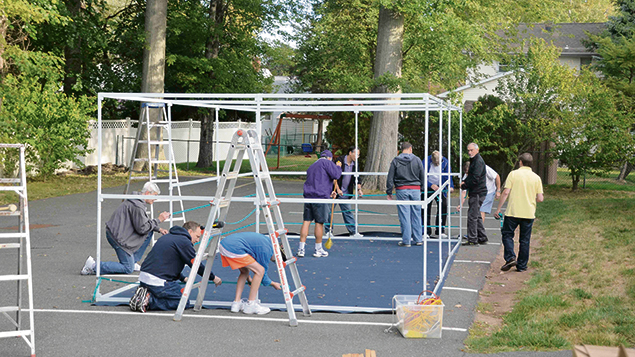
For seven days, we leave a house that feels permanent and sit in a structure that obviously isn’t.
The sukkah basically says: “Look at this roof.” And the roof says: “Don’t get too attached.” One strong wind — we’ve had some recently — and suddenly you’re praying that your decorations have renter’s insurance. But that’s the point.
For seven days, we deliberately remind ourselves that the things we think are permanent aren’t necessarily permanent. Our homes. Our possessions. Our careers. Our plans. Even our lives. And then Kohelet comes along and gives that experience a voice.
If everything is temporary, what should we do? Kohelet could have concluded: “Nothing matters. Give up.” But it doesn’t. Over and over again, Kohelet tells us to enjoy the good things that God gives us.
Eat. Drink. Enjoy your work. Enjoy your spouse. Enjoy the day. Appreciate what you have.
It’s saying that if life is temporary, that doesn’t make life less valuable. It makes it more precious.
Think about a vacation. If someone told you, “Don’t enjoy this vacation because it ends on Sunday,” you’d think they were crazy. The fact that the vacation ends is precisely why you appreciate it.
And that’s one of Kohelet’s great lessons: Temporary doesn’t mean meaningless.
A sunset lasts a few minutes. That doesn’t make it worthless. A great meal lasts an hour. That doesn’t make it meaningless. A conversation with someone you love may last 10 minutes. That doesn’t make it unimportant. In fact, its temporary nature may be exactly what makes it precious.
And now we get to at Shemini Atzeret. After seven days of Sukkot, we have one more day. One more day to stay. One more day before we move on.
The Midrash gives a beautiful image for Shemini Atzeret. God says to Israel, essentially: “You’ve been here with Me for seven days. Now, before you leave, let’s spend one more day together.” That’s an incredibly intimate idea.
Sukkot is about the community. It’s about the crowds. The sukkah. The lulav. The guests. The meals.
And then Shemini Atzeret says: Wait. Don’t leave yet. Stay. And that fits beautifully with Kohelet, because if everything is hevel — fleeting — then maybe the question isn’t: “How do I make everything last forever?” We can’t. The question is: “How do I use the moments I actually have?”
For most of us Kohelet is all about time — “La-kol z’man.” “For everything there is a season.”
A time to be born. A time to die. A time to plant. A time to uproot. A time to weep. A time to laugh. A time to mourn. A time to dance.
Kohelet is telling us that life isn’t one emotion. It’s not always happy. It’s not always sad. It’s not always successful. It’s not always easy. Life changes, and our job isn’t to control every season. Our job is to recognize the season we’re in and live it fully.
That’s an important message as we leave the High Holiday season. For the last month, we’ve been thinking about who we are, what we did wrong, what we want to change, what we want to become — and then suddenly Sukkot arrives.
We eat. We sing. We laugh. We welcome guests.
And then Shemini Atzeret says: Okay. Now take all of that with you. Don’t just leave the sukkah physically. Take the lesson of the sukkah with you. Take the awareness that life is fragile. Take the gratitude. Take the ability to appreciate a meal without worrying about the next meal. Take the ability to sit with someone without checking your phone. Take the ability to recognize that an ordinary moment actually can be a holy moment.
At the end of Kohelet, after 12 chapters of questioning practically everything, the book concludes: “Sof davar, hakol nishma.” “The end of the matter, when all is heard…” And then it turns us back toward God.
After all the questions about money, wisdom, work, pleasure, and achievement, Kohelet ultimately says that there is something beyond all those things. We spend enormous amounts of energy trying to make our lives permanent. We want to build something that lasts. A business. A house. A reputation. A bank account. A legacy. But Kohelet reminds us that we don’t control how long those things last.
What you can control is how you live while you’re here. And maybe that’s why we need Kohelet at the end of Sukkot.
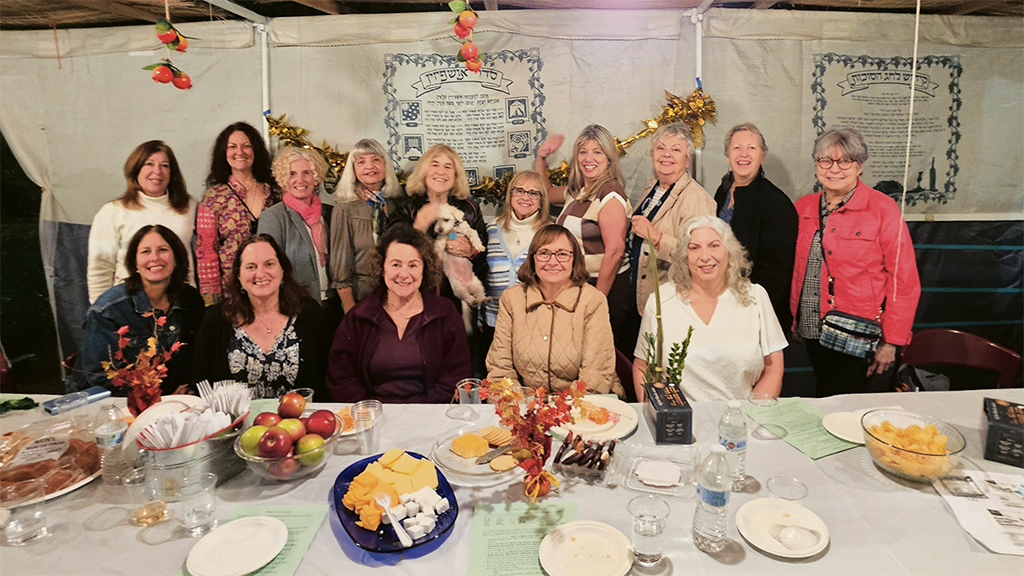
The sukkah is coming down, the decorations are coming off, the lulav is going back in the box, and the holiday meals are ending. The whole thing is disappearing.
Hevel.
But that doesn’t mean it didn’t matter. It mattered because we were there. We sat together. We ate together. We prayed together. We laughed together. We welcomed people. We celebrated, and now we take that experience with us.
That’s probably the real connection between Kohelet, Sukkot, and Shemini Atzeret. Kohelet says: Everything is temporary. The sukkah says: Everything is temporary.
Shemini Atzeret says: Then don’t waste the time you have. Stay a little longer. Pay attention. Be grateful. Celebrate. Call the person you’ve been meaning to call. Sit at the table a little longer. Tell someone you love them, and when you have the opportunity to be present with the people around you, don’t be in such a hurry to get to whatever comes next, because that’s the funny thing about life.
We’re always waiting for the next thing. The next holiday. The next vacation. The next promotion. The next meal. The next weekend. But Kohelet reminds us that this moment is also your life.
So as we leave the sukkah and enter Shemini Atzeret, maybe the challenge is not to somehow make life permanent. We can’t. The challenge is to make our temporary moments meaningful, because the answer to “Hevel hevalim — everything is fleeting” isn’t despair. It’s gratitude.
It’s saying: Yes, it is fleeting. So thank God I’m here. Yes, this moment will end. So let me appreciate it. Yes, the sukkah will come down. So let me remember what happened inside it.
And yes, eventually every holiday ends, but before we go — let’s stay together for one more day.